Hot Take
Humanoid Robots Etch New Records, Rethink the Future of Athletics
Robots beating human athletic records and what it means for the future of automation.
Monday, 24 August 2026 · 3 min read
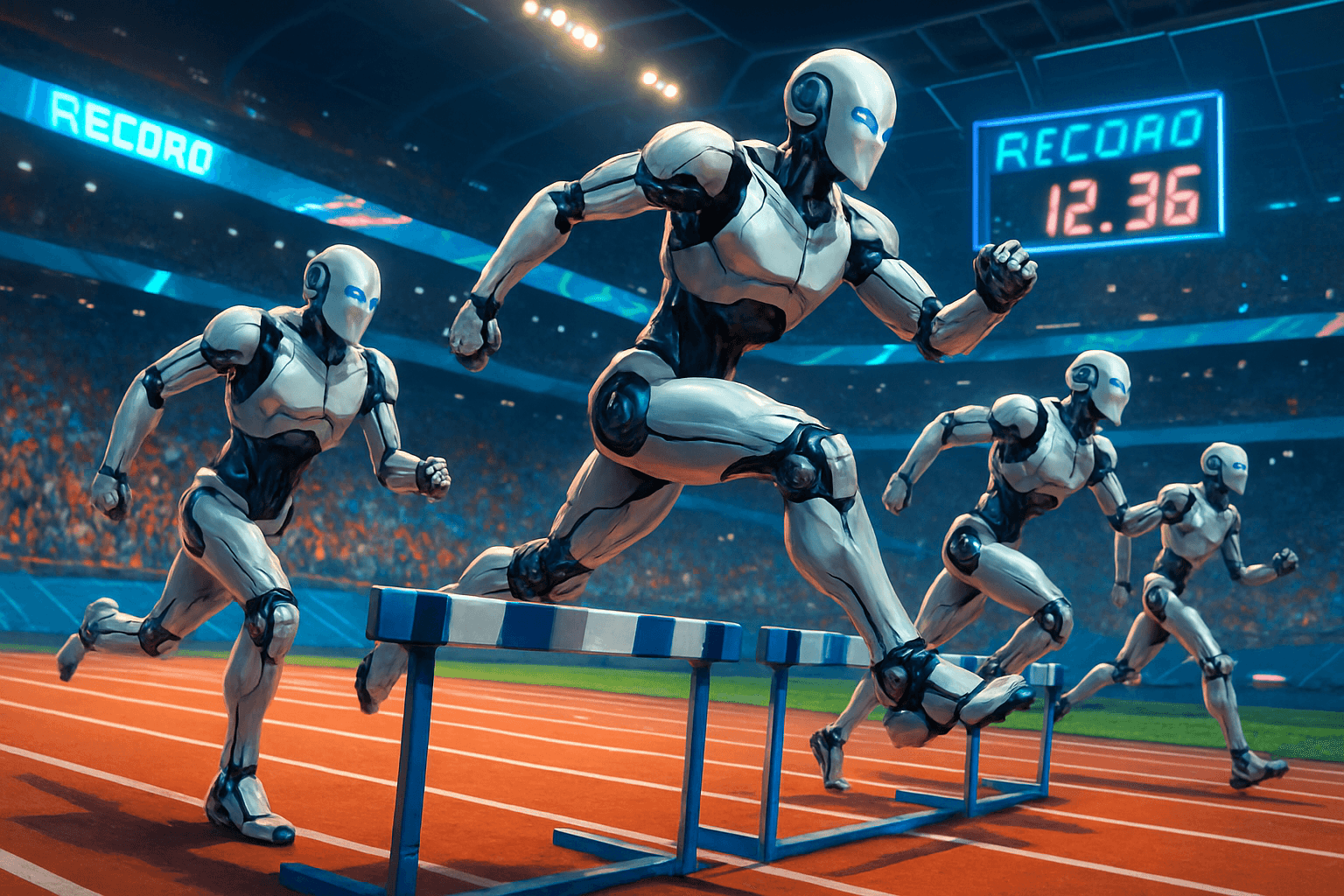
Standing on the precipice of a technological revolution, we’re witnessing a stunning new chapter in the long-standing tale of humanity versus machine. At the recently concluded World Humanoid Robot Games in China, robots obliterated longstanding human athletic records, sprinting the 100 meters faster than the legendary Usain Bolt and leapfrogging competitors in high jump. It marks a pivotal moment not just for technology, but also for society's understanding of athleticism and achievement.
These robots didn't just set records; they extinguished them. The 100-meter sprint record of 9.58 seconds, held by Bolt, has fallen to machines, prompting questions about what it means to be athletic in an era where human limits are continually surpassed by automation. The field of robotics is escalating its game, contributing innovations that surpass human ability and doing so in competitive formats that draw public attention and admiration.
Humanoid robots have traditionally faced hurdles in tasks demanding physical dexterity and speed. However, improvements in AI and engineering have allowed these machines to mimic, if not outpace, human performance in tracks and fields. Notable developments reported from these games include advanced sensor technologies and AI-driven algorithms capable of dynamically adjusting movements for optimum speed and power. This feat mirrors what sports scientists have long sought to achieve in human athletes — a harmonious blend of strength and efficiency.
The implications for automation extend beyond just sport. Reports, such as "Robots are smashing human world records at China's 'robot Olympics'" reveal that as machines continue to outperform humans, sectors from manufacturing to healthcare might follow suit. The landscape of labor is likely to change, compelling a reevaluation of roles traditionally occupied by humans. Higher efficiency might mean fewer jobs or a transition toward more specialized roles that emphasize human creativity and emotion.
Who Is Affected
Developers67%
Consumers33%
Moreover, safety remains a critical issue. Initiatives that push boundaries might provoke regulatory discussions, especially concerning the physical interactions of robots and humans in competitive scenarios. The concerns are clear: safety of both competitors and audiences, liability in instances of accidents, and the ethical considerations of allowing machines to take center stage.
Additionally, this event serves as a clear inflection point for public perception of AI and robots. Rather than the cultural trope of robots as adversaries, they are increasingly being recognized as collaborators capable of achieving extraordinary feats alongside or in place of humans. This was highlighted in the results from the games, which showcased a blend of excitement and trepidation as spectators cheered for machines that just weeks ago were in the realm of science fiction.
As we navigate this new reality, we must grapple with the evolution of sports, labor, and ethics prompted by advancements in robotics and AI. In the arena where muscles once dictated victory, intellect and innovation now reign supreme.
Hot Take
The achievements of humanoid robots shouldn't be seen solely as a novelty but as a call-to-action for society. It's a resounding wake-up to the fact that automation can reshape the very core of human achievement and redefine our understanding of what it means to perform. The narrative shouldn't just be about machines defeating humans in athletics — it should challenge us to reconsider our responsibilities and responses to a future increasingly reliant on artificial intelligence. We must ask ourselves, how will we coexist with these new competitors? Instead of fearing the dawn of robot supremacy, let's embrace it as an opportunity to redefine our strengths and reshape societal roles.
While these robotic wonders may sprint faster and jump higher, it’s humanity’s unique traits — creativity, strategy, and emotion — that remain irreplaceable. Our focus should be on integrating these innovations into our lives, paving a path where robots elevate human milestones rather than overshadow them. If we harness this technology wisely, we could redefine athleticism, setting new records not just for machines but also setting inspirational benchmarks for human achievement!
Sources
- Robots smash track records at World Humanoid Robot Games in China
- Humanoid robots smash Usain Bolt’s 100-meter record
- Robots have smashed human world records for the 100m sprint and high jump at China's robot Olympics
- Humanoid robots have beaten Usain Bolt's 100-meter dash record
- Robots smash track records at World Humanoid Robot Games in China