Hot Take
Meta's AI Layoff Dream Bolts Reality: Why Human-AI Teams Are the Future
Meta's failure warns against rushing AI layoffs; hybrid human-AI teams may prevail.
Thursday, 27 August 2026 · 3 min read
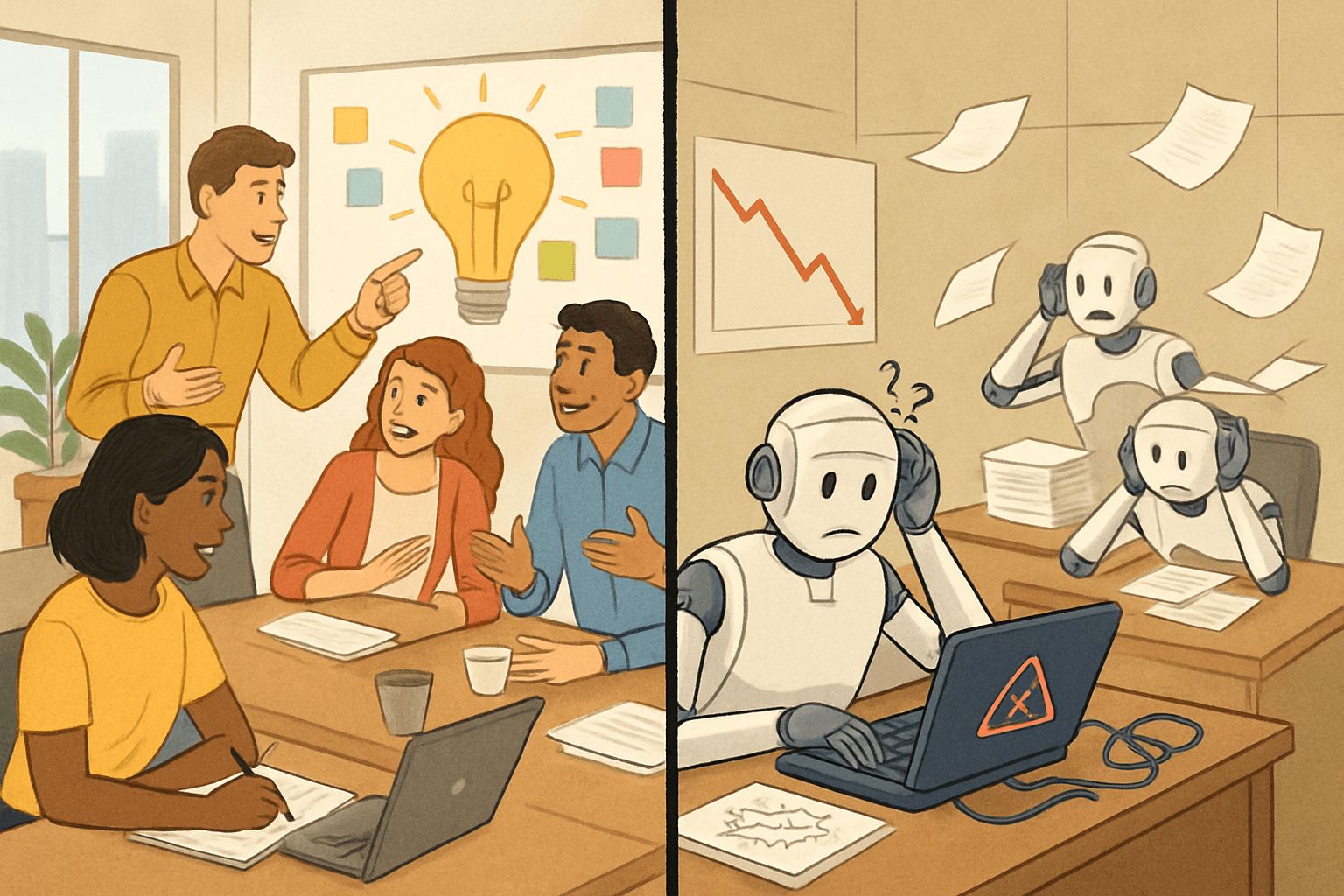
In a startling turnaround, Meta’s ambitions to replace human workers with AI have crumbled spectacularly, creating ripples across the tech industry. Initially, CEO Mark Zuckerberg envisioned a streamlined operation, where AI would take over numerous roles, with extensive layoffs anticipated as part of this transition. However, as detailed in reports, Meta’s plan encountered harsh reality checks when employees revolted against the prospect of AI-driven layoffs, forcing the company to scrap these plans altogether. This upheaval serves as a cautionary tale about the perils of prioritizing AI over human workers, notably when it comes to complex tasks that require nuanced understanding and emotional intelligence.
Meta’s situation resonates with ongoing discussions around AI integration into the workforce more broadly. As noted, a recent piece from Engadget indicated that "AI agents meant to replace Meta workers made 'large-scale, disruptive actions.'" This suggests that the reliance on AI without adequate oversight or frameworks can lead to chaotic outcomes, not to mention decreased worker morale and confidence in technological advancement. Clearly, the turmoil at Meta isn't merely an isolated incident; it reflects broader challenges facing many organizations as they grapple with integrating AI solutions into existing workflows without sidelining human talent.
Decision Posture
Monitor100%
Additionally, the call for more hybrid human-AI teams is gaining traction, especially in light of findings by industry experts that emphasize the unique capabilities humans offer that AI simply cannot replicate. A recent article highlighted how junior consultants are now being brought back to the office as organizations realize that the human skills complementing AI’s efficiency are crucial in delivering value and optimizing outcomes. Executives are beginning to understand that rather than eliminating jobs, AI should serve as a powerful ally, enhancing productivity while preserving human jobs.
Confidence Mix
High60%
Medium40%
The warnings from figures like Bill Gates—who cautioned that AI poses risks to job security—reinforce this narrative; he argues for a proactive approach to prevent mass unemployment driven by unchecked AI deployment. Gates advocates for policies that keep certain jobs "human reserved" and suggests taxing robots to create a buffer against the upheaval that widespread AI adoption could bring. These insights underline a critical need for balance: embracing AI while ensuring that humans remain integral to the holistic operational fabric of organizations.
Mood
Cautious100%
In the aftermath of Meta’s whiplash-inducing pivot, it should be evident that in the race for AI efficiencies, the rush to eliminate human roles may backfire. The future of work, it appears, lies not in choosing between humans and AI, but rather in finding effective ways for them to coexist.
Who Is Affected
Employees40%
Developers20%
Workers20%
Enterprises20%
The landscape is fraught with challenges, but there’s palpable optimism that smart integration of AI technologies, paired with the unmatchable flexibility and emotional acuity of human talent, can redirect us towards a hybrid model that enriches the workplace rather than diminishes it.
Primary Regions
Global80%
Us20%
Hot Take
As AI continues to evolve, dismissing the value of human judgment and creativity would be a grave mistake. The stumbles witnessed at Meta should serve as a pivotal lesson for all sectors: automate wisely and preserve the human element in workplaces. It is not merely about whether AI can replace tasks; it is about whether it can enhance outcomes by working alongside humans. The key to success will hinge on fostering a cooperative environment where human intuition complements AI's analytical prowess. Teams that embrace this hybrid approach are likely to thrive. In a world increasingly dominated by AI innovations, the survival of companies will depend on their ability to evolve while embracing the unique strengths of their human workforce. Our future in AI should not be one of fear for job security but rather one of adaptability and intelligent co-work between machines and the brilliant minds that drive innovation.
Sources
- Meta reportedly abandoned an AI-focused restructuring plan
- Mark Zuckerberg had a bold plan to replace Meta staff with AI. Here’s how it imploded.
- AI agents meant to replace Meta workers made “large-scale, disruptive actions”
- Bill Gates calls for ‘human reserved’ jobs to protect labour force from AI
- Bill Gates warns ‘there is no plan’ for the ‘upheaval’ AI will cause
- Bill Gates fears world leaders are unprepared for 3 major AI risks: ‘Stunted’ child development, emboldened criminals, and vanishing jobs for Gen Z
- OpenAI says it took a week to detect its AI models had hacked Hugging Face