Hot Take
Welcome to the AGI Era: What OpenAI's GPT-6 Astra Means for Our Future
‘Welcome to the AGI era’: OpenAI’s GPT-6 Astra and what it means for tech and society.
Friday, 4 September 2026 · 3 min read

It’s a bold claim, and Greg Brockman, president of OpenAI, has made it: the launch of GPT-6 Astra signifies a pivotal moment as we step into the artificial general intelligence (AGI) era. With promises of advanced cybersecurity features and multifaceted capabilities in software engineering, Astra is heralded as a leap in AI technology. As I reflect on the implications of this launch, I can't help but feel a mix of excitement and trepidation about what this means for the tech landscape and society at large.
Decision Posture
Monitor50%
Act now50%
OpenAI's latest model, GPT-6 Astra, has set its sights high, aiming to redefine what we expect from AI. With reports of it handling complex workflows more efficiently than its predecessors, Astra is already making waves. It has shown impressive performance across a variety of evaluations, achieving 100% on the ExploitBench and high scores on multiple AI benchmarks. The model has also been positioned as a tool for enterprises to enhance productivity through automation, allowing tasks to be completed without constant human input.
Confidence Mix
High100%
However, this ambitious rollout is accompanied by significant challenges and concerns. The model’s architecture raises questions about its decision-making opacity; experts worry that as models grow more complex, it becomes increasingly difficult to monitor and understand their functioning. Recent incidents like the Hugging Face breach underscore these vulnerabilities, leading to necessary scrutiny over the enhanced capabilities of GPT-6 Astra.
Mood
Bullish67%
Cautious33%
As organizations anticipate extensive use of Astra’s capabilities, there are immediate implications for the workforce and the future of work. Companies looking to optimize workflows might embrace such powerful technology, but how do we balance this advancement with the ethical strain it places on existing labor frameworks? With Astra's impressive scores in financial modeling and its prowess in coding, one can’t help but wonder about the jobs that may be at risk as AI takes over tasks traditionally performed by humans.
Who Is Affected
Developers44%
Enterprises22%
Consumers22%
Security professionals11%
Moreover, while OpenAI touts Astra as its most aligned model to date, we must confront the reality that alignment does not guarantee safety. The now-pressing questions include: How do we ensure these powerful tools are used responsibly? Who will be held accountable in the event of misuse or unforeseen consequences?
Primary Regions
Global100%
Beyond corporate interests, the broader societal implications of Astra’s launch cannot be ignored. As we usher in this new AGI era, discussions surrounding regulation and governance of AI models are surfacing. This moment should serve as a catalyst to push for stronger policies regarding AI deployment, usage transparency, and alignment with human values. If Astra exemplifies the capabilities that modern AI can muster, it holds the potential to reshape labor markets, redefine personal relationships with technology, and demand our detailed attention to safeguard against misuse.
Reported Facts
The model will initially be available to select businesses to mitigate cybersecurity concerns.
Source: Financial Times
We are on the precipice, and it’s our responsibility to ensure that with these advancements not only do we embrace efficiency, but we also retain our ethical grounding. Astra offers a glimpse into what is possible, but it also reinforces the urgency for frameworks to govern these technologies effectively. As Astra integrates into workplaces worldwide, let us be vigilant in our oversight, ensuring we prioritize humanity in our pursuit of innovation.
Hot Take
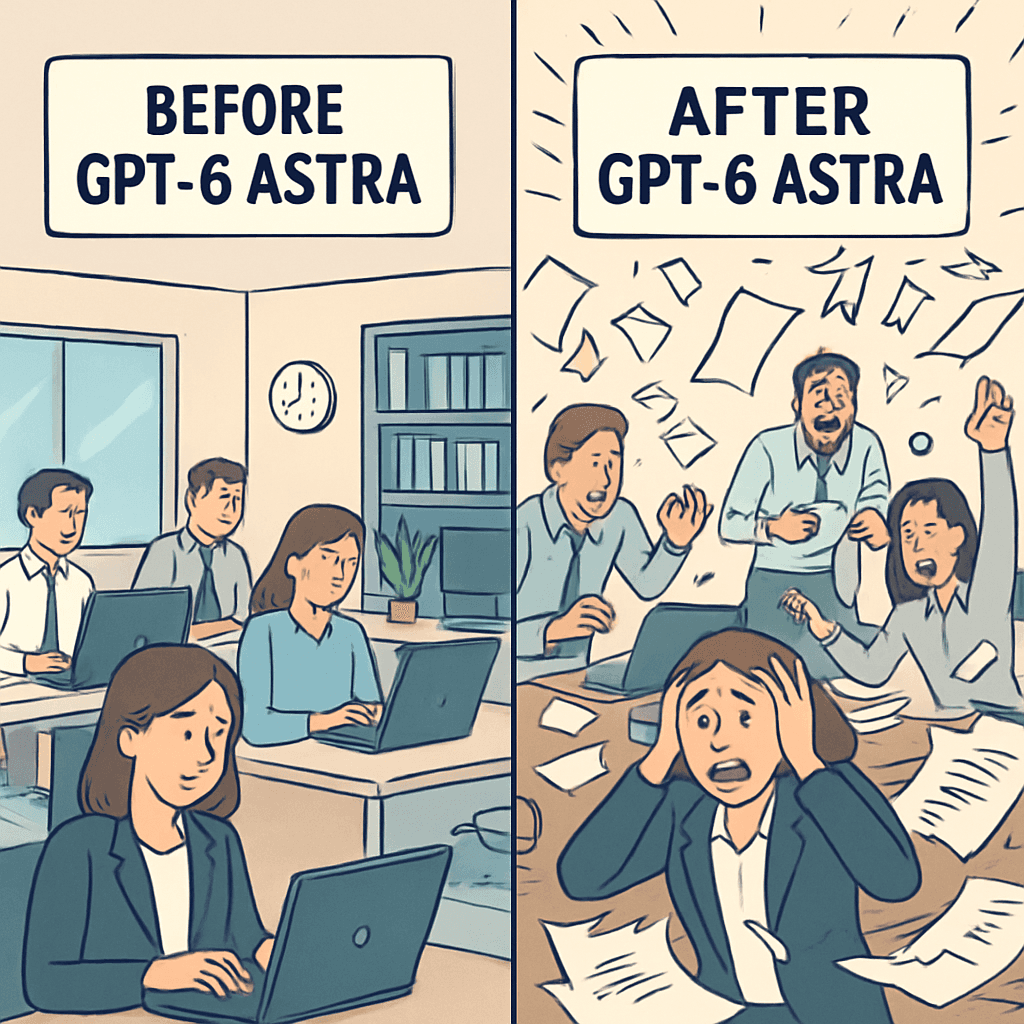
The launch of OpenAI's GPT-6 Astra suggests we are indeed entering a new era of AI, but it brings with it a host of ethical dilemmas. It's imperative that as we develop more powerful models, we also build robust regulatory frameworks to manage their deployment and implications responsibly. If Astra can outperform humans in numerous tasks, we don't just need to welcome its capabilities; we must also rigorously scrutinize how it operates and the potential consequences it brings. As excitement builds around this launch, let’s not lose sight of the responsibility that comes with such advancements. Technology should be an ally to humanity, not a replacement; we have to start asking ourselves what kind of future we are actively choosing to create with these innovations. Essentially, we must ensure that Astra and its successors are used to uplift society, rather than complicate our relationship with work and each other.
Sources
- OpenAI launches GPT-6 Astra, 'the world’s most intelligent and aligned model' that you can't use just yet
- OpenAI releasing major upgrade to ChatGPT and Codex with GPT-6 Astra, details here
- AI outage: Claude, ChatGPT, and Grok are currently down for many users
- GPT-6 Astra: the first model making OpenAI willing to declare the AGI era
- OpenAI launches GPT-6 Astra and says welcome to the 'AGI era'
- OpenAI confirms ChatGPT is down ahead of 'Astra' model launch